CDC's 2026 Guidelines for Emerging Infectious Diseases
Advertisements
The CDC has released new guidelines for emerging infectious diseases, effective immediately in 2026, aiming to enhance preparedness and response across the United States.
A significant shift in public health strategy is underway as the Centers for Disease Control and Prevention (CDC) announces a crucial update: Public Health Alert: CDC Releases New Guidelines for Emerging Infectious Diseases, Effective Immediately in 2026. These comprehensive guidelines are set to redefine how the nation prepares for and responds to future health crises, impacting communities and healthcare systems nationwide.
Understanding the Urgency Behind the New Guidelines
The landscape of global health is constantly evolving, presenting new challenges with each passing year. The CDC's decision to issue new guidelines for emerging infectious diseases in 2026 is a direct response to lessons learned from recent outbreaks and the anticipated threats of the future. This proactive stance underscores a commitment to safeguarding public health through enhanced readiness and adaptive strategies.
Recent global health events have highlighted critical gaps in existing frameworks, from surveillance mechanisms to rapid response protocols. These new guidelines aim to fill those gaps, ensuring a more robust and agile public health infrastructure. It's about building resilience against pathogens that respect no borders, requiring a unified and well-coordinated approach.
Advertisements
The Evolving Threat Landscape
Emerging infectious diseases are not a new phenomenon, but their frequency and potential impact have intensified. Factors such as climate change, increased global travel, and rapid urbanization contribute to the quicker spread of novel pathogens. The CDC's guidelines acknowledge these complex dynamics, proposing multi-faceted interventions.
- Zoonotic Spillover: Increased interaction between humans and wildlife raises the risk of diseases jumping species.
- Antimicrobial Resistance: The growing threat of drug-resistant microbes complicates treatment and containment efforts.
- Climate Change Impacts: Shifting environmental conditions can expand vectors for diseases like malaria and dengue.
The guidelines emphasize a 'One Health' approach, recognizing the interconnectedness of human, animal, and environmental health. This holistic perspective is crucial for identifying emerging threats at their source and implementing effective preventative measures before they escalate into widespread outbreaks.
In conclusion, the urgency driving these new guidelines stems from a clear understanding that the threats are real and continually evolving. The CDC is taking decisive action to arm the nation with the tools and strategies necessary to face these challenges head-on, protecting communities and minimizing the impact of future health emergencies.
Key Pillars of the 2026 CDC Guidelines
The newly released 2026 guidelines are structured around several core pillars, each designed to strengthen a specific aspect of public health preparedness and response. These pillars represent a comprehensive strategy, moving beyond reactive measures to embrace proactive prevention and rapid, informed action.
At the heart of these guidelines is the principle of integrated surveillance, which seeks to combine data from various sources to provide a real-time, holistic view of disease activity. This includes not only traditional clinical reporting but also environmental monitoring and even wastewater surveillance, offering early warning signals for potential outbreaks.
Enhanced Surveillance and Early Detection Systems
One of the most significant advancements in the new guidelines is the overhaul of surveillance systems. The CDC is mandating the implementation of advanced genomic sequencing capabilities across all state and local public health laboratories. This will allow for quicker identification of new variants and a better understanding of disease transmission patterns.
- Genomic Sequencing: Standardized protocols for rapid pathogen identification and variant tracking.
- Data Integration: Centralized platforms for sharing surveillance data across jurisdictions in real-time.
- Predictive Analytics: Utilizing AI and machine learning to forecast potential outbreak hotspots.
These enhanced systems are critical for early detection, enabling public health officials to intervene before an outbreak reaches critical levels. The ability to identify a threat quickly and accurately is the first line of defense in containing its spread and mitigating its impact on communities.
The guidelines also stress the importance of community-level engagement in surveillance. Encouraging public reporting of unusual symptoms and promoting health literacy are integral parts of building a resilient system where every individual plays a role in early detection. This bottom-up approach complements the top-down technological advancements.
In summary, the emphasis on enhanced surveillance and early detection forms the bedrock of the 2026 guidelines. By investing in cutting-edge technology and fostering community participation, the CDC aims to create a public health system that is both highly responsive and deeply integrated, capable of spotting and addressing threats with unprecedented speed and precision.

Streamlined Response Protocols and Resource Allocation
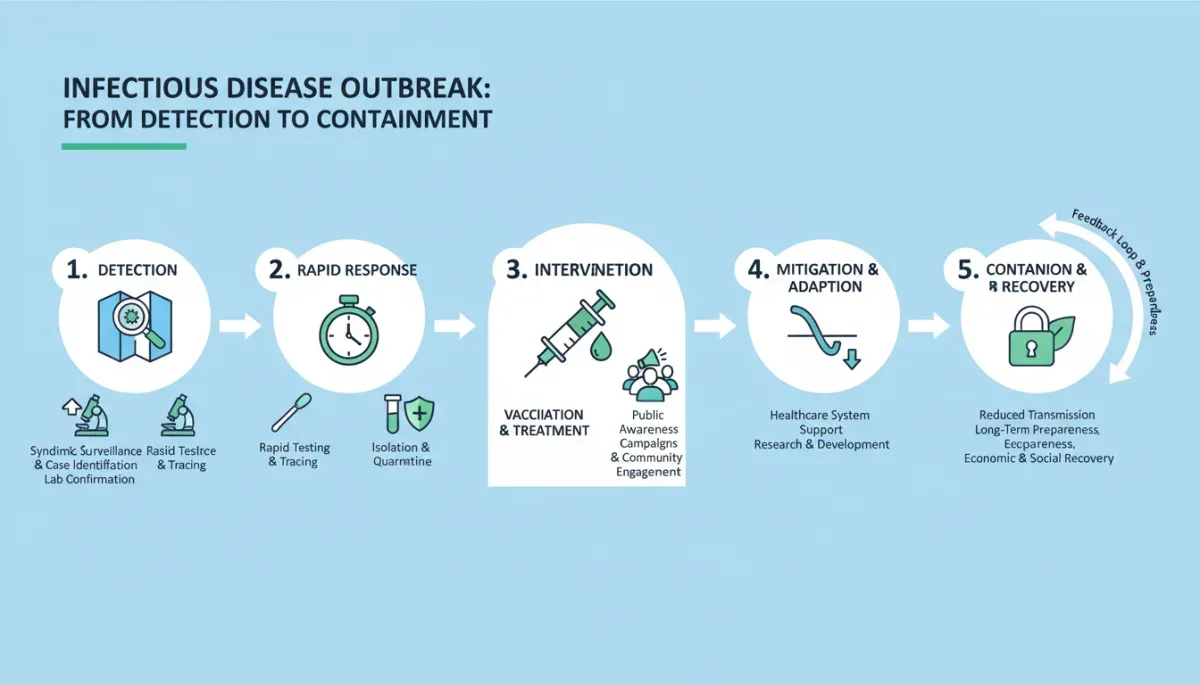
Effective response to an emerging infectious disease hinges on clear protocols and efficient resource allocation. The 2026 CDC guidelines introduce streamlined frameworks designed to minimize delays and maximize the impact of interventions during a public health emergency. This involves pre-positioning resources and establishing clear command structures.
The new protocols prioritize agility, allowing for rapid adaptation as more information about a pathogen becomes available. This contrasts with previous, often rigid, response plans that struggled to keep pace with fast-evolving situations. Flexibility is now a core tenet of the national response strategy.
Rapid Deployment of Medical Countermeasures
A critical component of the streamlined response is the ability to rapidly deploy medical countermeasures (MCMs), including vaccines, therapeutics, and diagnostic tests. The guidelines outline strategies for accelerating research, development, and manufacturing, ensuring that effective MCMs are available much faster than in previous crises.
- Strategic National Stockpile: Expansion and diversification of the SNS to include a wider array of MCMs.
- Public-Private Partnerships: Fostering collaborations to expedite the development and production of new treatments.
- Distribution Logistics: Establishing efficient supply chains for equitable and timely distribution across the nation.
The CDC is also emphasizing the importance of clear communication channels during a response. This includes not only informing the public but also ensuring seamless information flow between federal, state, and local health authorities. Coordinated messaging helps prevent misinformation and builds public trust, which is vital during a crisis.
Furthermore, the guidelines detail specific triggers for escalating response levels, based on real-time epidemiological data. This tiered approach ensures that resources are deployed proportionally to the threat, preventing both under-response and over-mobilization, which can strain resources unnecessarily.
In conclusion, the streamlined response protocols and resource allocation outlined in the 2026 guidelines are designed to create a more efficient and effective national defense against emerging infectious diseases. By focusing on rapid deployment, clear communication, and adaptable strategies, the CDC aims to minimize the human and economic toll of future outbreaks.
Strengthening Healthcare System Capacity and Workforce Readiness
A robust healthcare system is the backbone of any effective public health response. The 2026 CDC guidelines place significant emphasis on strengthening healthcare system capacity and ensuring the readiness of the healthcare workforce. This includes expanding infrastructure and providing specialized training.
The goal is to prevent the overwhelming of hospitals and clinics during surges, a common challenge observed in past outbreaks. The guidelines propose a multi-pronged approach that addresses both physical resources and the human capital required to manage complex health emergencies.
Training and Education Initiatives
The CDC is advocating for widespread training and education initiatives for healthcare professionals at all levels. This includes specific modules on emerging infectious disease identification, isolation protocols, and the safe administration of novel treatments. The aim is to create a workforce that is not only knowledgeable but also resilient and adaptable.
- Infection Control: Mandatory advanced training in hospital-acquired infection prevention.
- Emergency Preparedness Drills: Regular simulations to test response capabilities and identify areas for improvement.
- Mental Health Support: Programs to address the psychological toll on frontline healthcare workers during prolonged crises.
Beyond clinical staff, the guidelines also highlight the need to expand the public health workforce, including epidemiologists, contact tracers, and community health workers. These roles are crucial for surveillance, community engagement, and supporting individuals through isolation and recovery.
Moreover, the guidelines encourage healthcare facilities to invest in flexible infrastructure, such as convertible patient rooms and surge capacity units, that can be rapidly adapted to meet the demands of an outbreak. This foresight in planning helps ensure that critical care remains available even under extreme pressure.
To summarize, strengthening healthcare system capacity and workforce readiness is a cornerstone of the 2026 guidelines. By investing in training, expanding the workforce, and enhancing infrastructure, the CDC is building a more resilient healthcare system capable of withstanding the shocks of future emerging infectious diseases.
Community Engagement and Public Health Communication
Effective public health relies heavily on informed and engaged communities. The 2026 CDC guidelines underscore the critical role of community engagement and clear, consistent public health communication in mitigating the impact of emerging infectious diseases. This involves building trust and fostering collaborative relationships.
Misinformation and distrust can severely hamper response efforts, making it essential to establish credible communication channels before a crisis hits. The guidelines advocate for proactive strategies to educate the public and involve community leaders in health initiatives.
Building Trust Through Transparent Communication
Transparency is paramount in public health communication. The CDC's new guidelines emphasize the importance of providing accurate, timely, and easily understandable information to the public. This includes regular updates, clear explanations of risks, and practical advice on protective measures.
- Accessible Formats: Information presented in multiple languages and formats to reach diverse populations.
- Community Liaisons: Designating trusted local figures to disseminate health information and gather feedback.
- Social Media Strategy: Utilizing digital platforms for rapid dissemination of accurate information and countering misinformation.
The guidelines also promote the establishment of community advisory boards, allowing local voices to shape public health campaigns and ensure they are culturally sensitive and relevant. This participatory approach strengthens community ownership of health outcomes.
Furthermore, the CDC is committed to leveraging behavioral science to develop more effective communication strategies. Understanding how people process health information and make decisions is crucial for crafting messages that resonate and inspire action, such as vaccination or adherence to public health mandates.
In conclusion, community engagement and robust public health communication are vital components of the 2026 guidelines. By prioritizing transparency, accessibility, and community involvement, the CDC aims to foster a well-informed and cooperative public, essential for successfully navigating the challenges posed by emerging infectious diseases.
Global Collaboration and International Health Regulations
In an interconnected world, no nation can tackle emerging infectious diseases in isolation. The 2026 CDC guidelines heavily emphasize the importance of global collaboration and adherence to international health regulations. This involves strengthening partnerships with international bodies and sharing expertise across borders.
The guidelines recognize that a threat in one part of the world can quickly become a threat everywhere, necessitating a coordinated global response. This proactive approach aims to build a collective defense against pandemics, ensuring that early warnings are acted upon swiftly and effectively.
Strengthening Partnerships with WHO and International Bodies
The CDC is committed to enhancing its collaboration with the World Health Organization (WHO) and other international health organizations. This includes joint surveillance efforts, shared research initiatives, and coordinated responses to cross-border outbreaks. The goal is to create a seamless global health security architecture.
- Joint Research Projects: Collaborating on vaccine development and therapeutic innovations with global partners.
- Capacity Building: Supporting low-resource countries in developing their public health infrastructure.
- Information Exchange: Establishing secure platforms for rapid sharing of epidemiological data and best practices globally.
Adherence to the International Health Regulations (IHR) is also a central theme. The guidelines reinforce the importance of member states fulfilling their obligations under the IHR, particularly regarding reporting public health events and implementing agreed-upon measures at points of entry.
Moreover, the CDC plans to expand its global health workforce, deploying experts to various regions to assist in disease surveillance, outbreak investigation, and public health capacity building. This boots-on-the-ground approach is crucial for early detection and containment at the source.
In closing, global collaboration and strict adherence to international health regulations are indispensable elements of the 2026 guidelines. By fostering strong international partnerships and ensuring a coordinated global response, the CDC aims to build a more secure world against the relentless challenge of emerging infectious diseases.
| Key Point | Brief Description |
|---|---|
| Enhanced Surveillance | New systems for rapid detection, genomic sequencing, and predictive analytics. |
| Streamlined Response | Agile protocols and rapid deployment of medical countermeasures. |
| Healthcare Capacity | Strengthening infrastructure and workforce readiness through training. |
| Global Collaboration | Increased partnerships with international health organizations for a unified defense. |
Frequently Asked Questions About the 2026 CDC Guidelines
What is the primary goal of the new CDC guidelines for 2026?▼The primary goal is to significantly enhance national preparedness and response capabilities against emerging infectious diseases. This includes improving surveillance, streamlining response protocols, and strengthening healthcare infrastructure to mitigate future public health crises effectively.
How will these guidelines impact local communities?▼Local communities will see increased support for public health initiatives, better access to rapid testing and medical countermeasures, and enhanced communication strategies. The guidelines emphasize community engagement to ensure local needs are addressed and trust is built.
What role does technology play in the updated guidelines?▼Technology is crucial, with a focus on advanced genomic sequencing, integrated data platforms, and predictive analytics for early detection. These technological advancements aim to provide real-time insights and a more agile response to emerging threats.
Are there specific provisions for healthcare worker readiness?▼Yes, the guidelines mandate extensive training and education initiatives for healthcare professionals, covering infection control, emergency drills, and mental health support. The goal is to ensure a resilient and highly skilled workforce capable of handling future outbreaks.
How do these guidelines address global health security?▼The guidelines stress global collaboration, strengthening partnerships with organizations like the WHO, and adhering to international health regulations. This approach aims to build a collective defense against cross-border threats and ensure a coordinated global response.
A New Era of Public Health Preparedness
The release of the CDC's new guidelines for emerging infectious diseases, effective immediately in 2026, marks a pivotal moment in public health. This comprehensive framework, built on lessons from the past and foresight into the future, is designed to create a more resilient, responsive, and globally integrated system. By prioritizing enhanced surveillance, streamlined response, healthcare capacity building, community engagement, and international collaboration, the United States is poised to face future health challenges with greater confidence and effectiveness. This is not merely an update; it is a fundamental reorientation towards a proactive and adaptive public health strategy, ensuring the safety and well-being of all Americans in an ever-changing world.