Wearable Tech & Health: Improving Wellness by 20% in 2026
Advertisements

Wearable tech and health devices are poised to enhance personal wellness by 20% by 2026 through scientifically validated, data-driven insights and proactive health management.
The landscape of personal well-being is undergoing a profound transformation, largely driven by advancements in technology. Today, wearable tech health devices are no longer mere gadgets; they are sophisticated tools offering unprecedented insights into our physiological states and daily habits. This article explores the scientific underpinnings of how these innovative devices are projected to improve overall wellness by a significant 20% by the year 2026, empowering individuals to take a more proactive role in their health journey.
The Evolution of Wearable Health Technology
Wearable technology has come a long way from simple pedometers. Early devices primarily focused on basic activity tracking, counting steps and estimating calories burned. However, the field has rapidly expanded, incorporating advanced sensors and sophisticated algorithms to monitor a wide array of health metrics.
This evolution has been fueled by miniaturization of components, increased battery life, and enhanced data processing capabilities, allowing for continuous, non-invasive monitoring. The data collected provides a comprehensive picture of an individual's health, moving beyond episodic doctor visits to a continuous, real-time understanding of one's body.
Advertisements
From Basic Tracking to Advanced Monitoring
Initial wearables offered limited data, but modern devices provide a rich tapestry of health information. This shift from simple to complex data has been pivotal in their adoption and effectiveness.
- Activity Tracking: Beyond steps, now includes distance, elevation, active minutes, and various sport-specific metrics.
- Heart Rate Monitoring: Continuous and on-demand heart rate, heart rate variability, and even ECG capabilities in some devices.
- Sleep Analysis: Detailed breakdown of sleep stages (REM, light, deep), duration, disturbances, and overall sleep quality scores.
- Stress Detection: Algorithms analyze heart rate variability and other physiological signals to identify stress levels and recommend interventions.
The convergence of these features in a single, convenient device has made personal health monitoring more accessible than ever before. This integrated approach allows users to see how different aspects of their lifestyle impact their overall health, fostering a holistic view of wellness.
The journey of wearable tech from niche gadgets to mainstream health tools underscores a fundamental shift in how we approach personal well-being. This technological leap provides a solid foundation for future health improvements, making continuous monitoring an integral part of daily life.
Scientific Basis for Wellness Improvement
The claim that wearable tech can improve wellness by 20% by 2026 is not an arbitrary one; it is rooted in a growing body of scientific research and ongoing technological advancements. These devices provide objective data that can inform behavioral changes, facilitate early detection of health issues, and optimize personal health strategies.
The key to their effectiveness lies in their ability to bridge the gap between passive health awareness and active health management. By making personal health data readily available and understandable, wearables empower users to make informed decisions about their lifestyle and seek professional medical advice when necessary.
Data-Driven Behavioral Change
One of the most significant contributions of wearables is their capacity to drive behavioral change. Continuous feedback on activity levels, sleep patterns, and stress can motivate individuals to adopt healthier habits.
Studies have shown that individuals who consistently use wearable devices tend to be more physically active and report better sleep quality. The gamification elements often integrated into these devices, such as daily goals and challenges, further enhance user engagement and adherence to wellness routines.
- Increased Physical Activity: Real-time tracking encourages users to meet daily step goals and engage in regular exercise.
- Improved Sleep Hygiene: Detailed sleep data helps users identify patterns and make adjustments for better rest.
- Stress Reduction: Guided breathing exercises and mindfulness prompts, often triggered by stress detection, help users manage emotional well-being.
- Dietary Awareness: Some wearables integrate with food logging apps, providing a more complete picture of energy balance.
The ability to quantify and visualize progress creates a powerful feedback loop, reinforcing positive behaviors and making the journey towards better health more tangible and rewarding. This constant engagement with personal health data is a cornerstone of the projected wellness improvements.
Key Wearable Technologies Driving Health Outcomes
A diverse range of wearable technologies is contributing to the advancement of personal health. These devices vary in form factor, from wrist-worn trackers to smart rings and patches, each offering unique capabilities tailored to different health needs. The innovation in sensor technology and data analytics is continually expanding their utility.
Understanding the specific types of devices and their applications is crucial to appreciating their collective impact on wellness. Each category addresses different aspects of health, contributing to a comprehensive monitoring ecosystem.
Smartwatches and Fitness Trackers
These are perhaps the most common and recognizable wearable health devices. Modern smartwatches and fitness trackers offer a comprehensive suite of health monitoring features, making them central to daily wellness management.
They combine convenience with powerful analytical capabilities, providing users with actionable insights. The integration with smartphone apps further enhances their utility, allowing for data visualization, trend analysis, and sharing with healthcare providers.
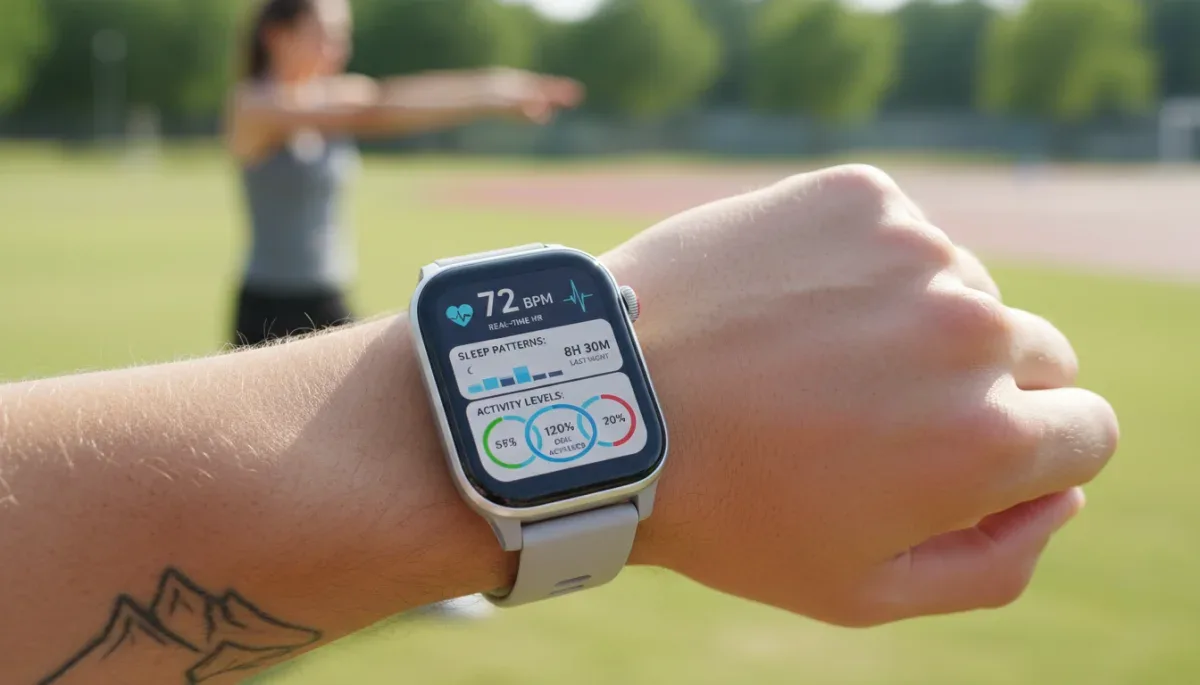
Smartwatches and fitness trackers are becoming indispensable tools for anyone looking to proactively manage their health. Their versatility and continuous data collection make them powerful allies in the pursuit of improved wellness.
Specialized Health Monitors
Beyond general-purpose trackers, a growing number of specialized wearable devices are emerging to address specific health concerns. These include devices for continuous glucose monitoring (CGM), smart patches for medication adherence, and even smart clothing with embedded sensors.
These specialized monitors offer precision and dedicated functionality for managing chronic conditions or specific health goals. Their targeted approach allows for more granular data collection and personalized interventions.
- Continuous Glucose Monitors (CGM): Essential for diabetes management, providing real-time glucose levels without finger pricks.
- Smart Rings: Compact and unobtrusive, offering advanced sleep tracking, heart rate, and temperature monitoring.
- Smart Patches: Adhere to the skin for continuous monitoring of vital signs, drug delivery, or wound healing.
- Smart Clothing: Garments with integrated sensors for tracking athletic performance, posture, and physiological responses during activity.
The development of these specialized devices highlights the expanding potential of wearable technology to cater to diverse and complex health requirements. Their ability to provide highly specific and accurate data is critical for both individual health management and clinical applications.
Challenges and Considerations for Widespread Adoption
While the promise of wearable tech in health is immense, several challenges need to be addressed for widespread adoption and to fully realize the projected 20% improvement in wellness. These include issues related to data accuracy, privacy, user engagement, and equitable access.
Overcoming these hurdles will require collaborative efforts from technology developers, healthcare providers, policymakers, and consumers. A thoughtful approach to these considerations will ensure that the benefits of wearable technology are accessible and effective for everyone.
Data Accuracy and Reliability
The effectiveness of wearable devices hinges on the accuracy and reliability of the data they collect. Variations in sensor quality, placement, and individual physiological differences can impact the precision of measurements.
Consumers need to be confident that the data provided by their devices is trustworthy, especially when making health-related decisions. Ongoing research and validation are critical to improving the scientific rigor of wearable health metrics.
Ensuring data accuracy is paramount for both personal use and for integration into clinical settings. Standardized testing and certification processes could help build greater trust and confidence in these technologies.
Privacy and Data Security
As wearables collect increasingly sensitive personal health information, privacy and data security become paramount concerns. Users need assurances that their data is protected from unauthorized access and misuse.
Clear policies regarding data ownership, sharing, and anonymization are essential. Robust encryption and cybersecurity measures must be implemented to safeguard this highly personal information, fostering trust between users and technology providers.
- Data Ownership: Users should have clear control over their health data and how it is used.
- Consent Mechanisms: Transparent and easily understandable consent processes for data sharing.
- Regulatory Frameworks: Development of strong regulations (like HIPAA in the US) specifically for wearable health data.
- Cybersecurity: Continuous investment in advanced security protocols to prevent breaches.
Addressing these privacy and security concerns is not just a technical challenge but also a societal one, requiring ongoing dialogue and robust legal frameworks to protect individuals' rights.
Integrating Wearables into Healthcare Systems
For wearable tech to achieve its full potential in improving public wellness, seamless integration into existing healthcare systems is crucial. This involves not only technological compatibility but also changes in clinical practices, reimbursement models, and professional training.
The goal is to move beyond consumer-grade tracking to medically validated applications that can support diagnosis, treatment, and long-term disease management. This integration promises a more proactive, personalized, and efficient healthcare experience.
Remote Patient Monitoring (RPM)
Wearables are transforming remote patient monitoring, allowing healthcare providers to continuously track vital signs and other health metrics of patients outside traditional clinical settings. This is particularly beneficial for managing chronic conditions, post-operative care, and elderly populations.
RPM can lead to earlier detection of complications, reduced hospital readmissions, and improved patient outcomes. It also empowers patients to be more engaged in their own care, fostering a sense of control and responsibility.
The ability to collect continuous, real-world data offers clinicians a much richer understanding of a patient's condition than periodic office visits alone. This data can inform more precise treatment adjustments and personalized care plans.
Preventive Health and Early Detection
Beyond managing existing conditions, wearables are proving invaluable in preventive health and the early detection of potential health issues. Continuous monitoring can identify subtle changes in physiological parameters that might signal the onset of a disease before symptoms become apparent.
- Cardiac Health: Early detection of arrhythmias or signs of heart failure through continuous ECG and heart rate variability monitoring.
- Respiratory Issues: Monitoring of oxygen saturation and breathing patterns to identify respiratory distress.
- Infection Detection: Changes in body temperature and heart rate variability can sometimes indicate the early stages of an infection.
- Fall Detection: Accelerometers in wearables can detect falls and automatically alert emergency contacts or services.
This proactive approach to health can significantly reduce the burden of disease, improve quality of life, and lower healthcare costs by preventing serious conditions or catching them at their most treatable stages. The integration of wearables into preventive care pathways is a cornerstone of future wellness strategies.
The Future Outlook: Beyond 2026
Looking beyond the 20% wellness improvement projected for 2026, the future of wearable tech in health promises even more profound transformations. Advances in artificial intelligence, bio-sensing, and personalized medicine will further enhance the capabilities and impact of these devices.
The convergence of these technologies will create a highly intelligent and adaptive health ecosystem, where personal devices work in concert with professional healthcare to deliver truly individualized and predictive care. The focus will shift from reactive treatment to proactive, preventative health maintenance.
AI and Predictive Analytics
The integration of artificial intelligence (AI) and machine learning will enable wearables to move beyond simple data collection to sophisticated predictive analytics. AI algorithms can analyze vast amounts of personal health data to identify subtle trends and predict potential health risks before they materialize.
This predictive capability will allow for highly personalized interventions and recommendations, tailoring health advice to an individual's unique physiological profile and lifestyle. Imagine a device that not only tracks your sleep but also predicts when you're likely to experience sleep deprivation and suggests proactive measures.
AI will also enhance the accuracy of data interpretation, filtering out noise and highlighting clinically significant patterns. This will make wearable data even more valuable for both personal health management and professional medical diagnosis.
Personalized Medicine and Digital Therapeutics
Wearables are set to play a crucial role in the advancement of personalized medicine, where treatments and interventions are tailored to an individual's genetic makeup, lifestyle, and environment. By providing continuous, real-time physiological data, wearables enable highly customized health strategies.
- Tailored Exercise Regimens: Based on real-time performance and recovery metrics.
- Optimized Nutrition Plans: Informed by activity levels, metabolic responses, and even gut microbiome data (via integrated sensors).
- Digital Therapeutics: Prescription-grade software delivered via wearables to treat or manage medical conditions, often behavioral or cognitive.\
- Drug Efficacy Monitoring: Tracking physiological responses to medication to optimize dosage and timing.
The development of digital therapeutics, delivered through wearable platforms, represents a new frontier in healthcare. These software-based interventions, often backed by clinical trials, can provide evidence-based treatment for a variety of conditions, from mental health disorders to chronic pain management. This truly represents a paradigm shift in how healthcare is delivered and experienced.
Ethical Considerations and Equity in Access
As wearable tech becomes more integral to health, it's vital to address the ethical implications and ensure equitable access. The potential for a two-tiered health system, where only those who can afford the technology benefit, is a significant concern. Ethical frameworks must guide development and deployment.
Discussions around data bias, algorithmic fairness, and the potential for surveillance are critical. Ensuring that these technologies serve all segments of society, rather than exacerbating health disparities, is a fundamental challenge that must be actively addressed.
Addressing Algorithmic Bias
The algorithms powering wearable health devices are trained on vast datasets. If these datasets are not diverse and representative of the entire population, the algorithms can develop biases, leading to inaccurate or less effective health insights for certain demographic groups.
Developers must prioritize diverse data collection and rigorous testing to ensure algorithmic fairness. Transparency in how algorithms are developed and validated is also crucial for building public trust and ensuring equitable health outcomes.
Regular audits and independent reviews of algorithmic performance across different populations are necessary to identify and mitigate biases, ensuring that wearable tech benefits everyone equally. This proactive approach is essential for ethical AI in health.
Ensuring Equitable Access
The cost of advanced wearable health devices can be a barrier to access for many individuals, potentially widening existing health disparities. Strategies are needed to make these technologies more affordable and accessible to all socioeconomic groups.
- Insurance Coverage: Encouraging health insurance providers to cover or subsidize wearable devices for preventive care or chronic disease management.
- Public Health Programs: Integrating wearables into government-funded health initiatives for underserved communities.\
- Affordable Options: Promoting the development of more cost-effective, yet reliable, wearable devices.
- Digital Literacy Programs: Providing education and support to help individuals effectively use and understand wearable technology.
Achieving a 20% improvement in wellness by 2026 will require not just technological advancement, but also a commitment to social equity, ensuring that the benefits of wearable health tech are universally shared.
| Key Aspect | Brief Description |
|---|---|
| Data-Driven Behavior | Wearables provide objective data motivating healthier habits like increased activity and better sleep. |
| Remote Monitoring | Facilitates continuous tracking of patient health outside clinical settings, improving chronic care. |
| Preventive Health | Early detection of health issues through continuous physiological data monitoring. |
| Future Innovations | AI and personalized medicine will further enhance predictive health and tailored interventions. |
Frequently Asked Questions About Wearable Health Tech
How accurate are wearable health devices?▼Accuracy varies significantly between devices and metrics. While many provide reliable data for general wellness, medical-grade accuracy is typically found in specialized devices. Always consult a healthcare professional for critical health decisions.
Can wearables truly improve overall wellness by 20%?▼Projections suggest a 20% improvement by 2026, driven by continuous monitoring, data-driven behavioral changes, and integration into healthcare. This improvement is cumulative across various health aspects, fostering a more proactive approach to well-being.
What are the main privacy concerns with wearable health data?▼Key concerns include unauthorized data access, misuse of personal health information, and lack of clear data ownership policies. Robust encryption, strong regulations, and transparent consent are crucial for protecting user privacy.
How do wearables assist in early disease detection?▼By continuously monitoring vital signs like heart rate, sleep patterns, and temperature, wearables can detect subtle physiological changes that may indicate the early onset of conditions such as arrhythmias, infections, or respiratory issues, prompting timely medical intervention.
Will wearable technology be integrated into standard healthcare?▼Yes, integration is already underway through remote patient monitoring and digital therapeutics. Future trends indicate deeper incorporation into personalized medicine, leveraging AI for predictive analytics and tailored health interventions within clinical settings.
Conclusion
The scientific review of wearable tech health devices clearly indicates a transformative potential for personal wellness. With projections pointing to a 20% improvement by 2026, these devices are empowering individuals to gain unprecedented insights into their health, fostering proactive management and data-driven behavioral changes. While challenges such as data accuracy, privacy, and equitable access remain, ongoing innovation and thoughtful integration into healthcare systems are paving the way for a future where personalized, preventive health is within everyone's reach. The journey of wearable technology from a niche gadget to an indispensable health companion underscores a profound shift in how we approach and manage our well-being.